
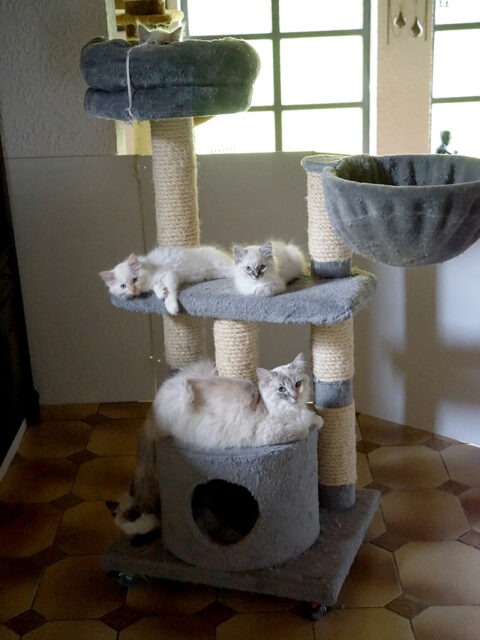
1. What is the personality of a Ragdoll cat?
If you’re dreaming of a gentle, dog-like companion, the Ragdoll personality might be perfect for you. These cats are famous for their serene and affectionate nature. They adore their people and will often follow you from room to room, not to cause trouble, but simply to be near you. Unlike some independent breeds, Ragdolls crave human interaction. They are typically calm, not hyperactive, and love nothing more than curling up in your lap. Their playful side emerges with gentle games, but their overall demeanor is one of a peaceful, loving family member.
2. Are Ragdoll cats friendly?
Absolutely. Friendliness is a cornerstone of the Ragdoll breed. They are not typically shy or aloof with strangers; instead, they often greet visitors with curiosity rather than fear. This inherent friendliness extends to other family pets, making them excellent candidates for multi-pet households. Their sweet and trusting nature means they are far more likely to approach a new person for a sniff and a head scratch than to hide under the bed.
3. Are Ragdoll cats cuddly?
Ragdolls are the definition of a “lap cat” and are famously cuddly. Their floppy, relaxed nature when held makes them perfect cuddle buddies. They will often seek out your lap for a nap or press against your side while you sleep. This desire for physical closeness is a key trait, so if you want a hands-on, affectionate pet that enjoys snuggles, a Ragdoll will happily oblige.
4. Do Ragdoll cats like to be held?
Yes, this is one of their most defining characteristics. The breed’s name comes from their tendency to go limp and relaxed when picked up, much like a child’s rag doll. They generally enjoy being held and cradled, which is rare in the feline world. This trait makes them wonderful pets for families, as they tend to tolerate being carried with remarkable patience.
5. Are Ragdoll cats playful?
While not as endlessly energetic as some breeds, Ragdolls have a gentle, playful side. They enjoy interactive toys like feather wands and will often engage in a game of fetch with a crinkle ball. Their play is typically soft-mouthed and careful—they rarely extend their claws. This moderate playfulness makes them entertaining without being overwhelming.
6. Are Ragdoll cats smart?
Ragdolls are highly intelligent cats. They are quick learners and can be trained to perform tricks, walk on a harness, or even respond to commands. This intelligence, combined with their desire to please, makes them very responsive to positive reinforcement training like clicker training. Keep their minds active with puzzle toys to prevent boredom.
7. Why are Ragdoll cats so floppy?
The “floppy” nature of Ragdolls is a combination of their genetics and temperament. It’s a deeply ingrained, relaxed muscle tone that occurs when they are held or feel safe. This isn’t a sign of weakness; it’s a sign of ultimate trust. They feel so secure with their family that they completely let go, making them feel like a soft, plush toy in your arms.
8. Are Ragdoll cats aggressive?
It is highly unusual for a well-bred, properly socialized Ragdoll to show aggression. Their temperament is selectively bred for gentleness. They are not known for biting or scratching out of malice. If a Ragdoll does show aggression, it is almost always a sign of fear, pain, or significant stress and warrants a visit to the veterinarian.
9. Do Ragdoll cats have a unique temperament?
Their temperament is truly unique in the cat world. The combination of dog-like devotion, a calm and placid nature, high intelligence, and their signature floppy relaxation when held sets them apart. They offer the affection of a lap cat with the interactive potential of a more active breed, all wrapped in a stunningly beautiful package.
10. Are male or female Ragdoll cats more affectionate?
While individuals vary, a common observation among breeders and owners is that male Ragdolls often remain in a more perpetual, kitten-like state of affection. They are frequently described as more overtly cuddly and goofy. Females are deeply loving but can sometimes display a more independent, “queen-like” demeanor. For maximum lap-time, a male might have a slight edge.
Care & Health
11. How long do Ragdoll cats live?
With proper care, a Ragdoll cat’s lifespan is typically 12 to 15 years. Some can even live into their late teens or early twenties. Their longevity depends on a combination of genetics from a responsible breeder, a high-quality diet, regular veterinary check-ups, and a safe, indoor lifestyle.
12. What are common Ragdoll cat health problems?
While generally healthy, Ragdolls are predisposed to a few genetic conditions. Reputable breeders test for these:
- Hypertrophic Cardiomyopathy (HCM): A form of heart disease. This is the most significant health concern in the breed.
- Polycystic Kidney Disease (PKD): A condition that causes cysts to form in the kidneys.
Always choose a breeder who provides documented proof of HCM and PKD testing for their breeding cats.
13. Are Ragdoll cats high maintenance?
Their personality is low-maintenance, but their coat requires a moderate level of care. Their semi-long fur is silky and less prone to matting than other long-haired breeds, but it still needs regular grooming. A thorough brushing 2-3 times per week is essential to prevent tangles and reduce shedding. Their laid-back nature makes grooming sessions typically easy.
14. How big do Ragdoll cats get?
Ragdolls are one of the largest domesticated cat breeds. They have a slow maturation rate, reaching their full size around 4 years of age. An adult male typically weighs between 15-20 pounds, with females being slightly smaller at 10-15 pounds. They are not just heavy; they are solidly built with a substantial bone structure.
15. How much does a Ragdoll cat weigh?
Weight varies by gender and genetics. A healthy adult male Ragdoll usually weighs 15 to 20 pounds, while a female typically ranges from 10 to 15 pounds. It’s important to monitor their diet, as their calm nature can make them prone to weight gain.
16. What should I feed my Ragdoll cat?
Feed your Ragdoll a high-quality, high-protein cat food to support their large frame and energy needs. Look for a diet where meat is the first ingredient. Many owners opt for a combination of premium dry kibble for dental health and wet food for hydration. Avoid foods with high carbohydrate content and fillers like corn and wheat.
17. Do Ragdoll cats need a special diet?
They don’t need a “special” breed-specific diet, but they thrive on high-quality nutrition. Their large size means they need food that supports joint health. Because they can be prone to weight gain, portion control is critical. A diet rich in animal protein and low in carbohydrates is ideal.
18. How often should I groom a Ragdoll cat?
To keep their beautiful coat tangle-free, plan on brushing your Ragdoll 2 to 3 times per week. Use a stainless-steel comb and a slicker brush. During seasonal shedding periods in spring and fall, you may need to increase this to daily brushing. This routine also minimizes hairballs.
19. Do Ragdoll cats shed a lot?
Yes, Ragdolls do shed. They have a thick, semi-long coat, so you will find fur around your home. However, their shedding is often more manageable than other long-haired cats because their fur is more like rabbit fur—silky and less likely to form stubborn mats. Regular brushing is the key to controlling loose hair.
20. Are Ragdoll cats hypoallergenic?
No cat is truly hypoallergenic, and Ragdolls are not considered a hypoallergenic breed. They produce the Fel d 1 protein in their saliva and skin oils, which is the primary allergen for most people. While no breed is guaranteed to be safe for allergy sufferers, some people with mild allergies may react less to breeds with less fur or different coat types.
Cost & Acquisition
21. How much does a Ragdoll cat cost?
The cost of a Ragdoll kitten from a reputable breeder typically ranges from $1,500 to $2,500+ in the United States. Several factors affect the price, including the breeder’s reputation, the kitten’s bloodline, color, pattern, and geographic location. Pet-quality kittens are less expensive than show-quality ones.
22. Where can I find Ragdoll cat breeders near me?
Start your search with the Cat Fanciers’ Association (CFA) or The International Cat Association (TICA) websites. They have directories of registered breeders. Avoid pet stores and backyard breeders. A good breeder will be happy to answer questions, provide health clearances, and invite you to visit their cattery.
23. Why are Ragdoll cats so expensive?
The high cost reflects the extensive care and investment responsible breeders put in. This includes: genetic health testing for parents, high-quality food, vaccinations, deworming, spay/neuter surgery, microchipping, and the significant time spent socializing each kitten. Breeding healthy, well-tempered Ragdolls is a costly and time-consuming labor of love.
24. How can I adopt a Ragdoll cat?
While less common, you can find Ragdolls through breed-specific rescues. Organizations like “Ragdoll Rescue USA” or local purebred cat rescues occasionally have Ragdolls or Ragdoll mixes needing homes. Be patient, as there are often waiting lists for these desirable cats.
Behavior & Training
25. Do Ragdoll cats meow a lot?
Ragdolls are not known for being excessively vocal. They tend to have a soft, sweet voice and will “talk” to you with gentle chirps and meows to greet you or ask for food, rather than yowl persistently. They are communicative but not loud or annoying.
26. Are Ragdoll cats good with dogs?
Their gentle and adaptable nature makes Ragdolls generally excellent with dog-friendly dogs. The key is a slow, proper introduction. A Ragdoll’s calm confidence can be less threatening to a dog than a skittish cat. They often become fast friends with canine companions who respect their space.
27. Are Ragdoll cats good with other cats?
Yes, Ragdolls are very sociable and typically enjoy the company of other cats. They are not territorial or dominant, making introductions to a new feline friend smoother than with many other breeds. They often benefit from having a cat companion, especially if left alone for long hours.
28. Can Ragdoll cats be left alone?
They are social creatures and can become lonely if left alone for very long periods. While they can handle a standard workday, leaving them alone for more than 8-10 hours regularly is not ideal. If you have a demanding schedule, consider getting a second pet, like another cat, to keep them company.
29. Do Ragdoll cats have separation anxiety?
Because they form such deep bonds with their owners, Ragdolls can be prone to mild separation anxiety. Signs include excessive meowing when you leave or over-grooming. Providing plenty of toys, a window to look out of, and if possible, a feline friend can help alleviate their stress when you’re gone.
30. Are Ragdoll cats indoor or outdoor cats?
Ragdolls should be strictly indoor cats. Their trusting and docile nature means they do not have the street smarts to defend themselves from other animals, cars, or people. Their beautiful blue eyes are also often sensitive to bright sunlight. Keeping them indoors is the only way to ensure a long and safe life.
31. Can you train a Ragdoll cat?
Absolutely! Their intelligence and food motivation make them highly trainable. You can easily teach them tricks like sit, high-five, or come when called using clicker training and positive reinforcement like treats. Many also learn to walk on a harness and leash for safe outdoor adventures.
Appearance & Breeds
32. What does a Ragdoll cat look like?
Ragdolls are striking, large cats with a semi-long, silky coat, a broad body, and brilliant blue eyes. They have a distinctive color-point pattern, meaning their ears, face mask, legs, and tail are a darker color than their lighter body. They are the picture of sturdy, gentle elegance.
33. What colors do Ragdoll cats come in?
Ragdolls come in six main point colors:
- Seal: A deep dark brown, almost black.
- Blue: A soft slate gray.
- Chocolate: A warm milk-chocolate brown.
- Lilac: A pale, frosty gray with pinkish tones.
- Red (Flame): A vibrant orange-gold.
- Cream: A soft, buff cream.
34. What are the different Ragdoll cat patterns?
There are three core patterns:
- Colorpoint: Dark points with no white. The body is the lightest color.
- Mitted: Dark points with white paws on the front (looking like mittens) and white boots up the back legs. They have a white chin and often a white blaze on the face.
- Bicolor: Dark points on the ears and tail, but with an inverted “V” on the face, and a white chest, belly, and all four legs.
35. Do all Ragdoll cats have blue eyes?
Yes! Without exception, all purebred Ragdolls have stunning, large, oval-shaped blue eyes. It is a non-negotiable breed standard. If a cat looks like a Ragdoll but has green or gold eyes, it is not a purebred Ragdoll.
36. What is the difference between a Ragdoll and a Birman?
This is a common point of confusion. Both have colorpoints and blue eyes. Key differences:
- Paws: Birmans have pure white “gloves” on their paws. Ragdoll mitts are less precise and can blend.
- Coat: Ragdolls have a more plush, rabbit-like coat. Birmans have a single, silkier coat.
- Size: Ragdolls are significantly larger and more substantial.
- Build: Birmans have a more elongated, less cobby body.
Kitten-Specific Questions
37. How much does a Ragdoll kitten cost?
As mentioned earlier, expect to invest between $1,500 and $2,500 for a Ragdoll kitten from a responsible breeder. This price should include a health guarantee, initial vaccinations, spay/neuter, and a thorough health screening.
38. What should I look for when choosing a Ragdoll kitten?
Look for a clean, active, and curious kitten from a breeder who:
- Lets you visit their home or cattery.
- Shows you the mother cat.
- Provides health clearances for both parents (HCM/PKD).
- Keeps kittens in the home as part of the family, not in cages.
- Asks you as many questions as you ask them.
39. When do Ragdoll kittens change color?
All Ragdoll kittens are born pure white. Their point color begins to slowly develop in the first few weeks of life. You’ll see the first hints of color on their ears and nose leather. The color continues to darken and develop until they reach full maturity around two years of age.
40. What is the best age to bring a Ragdoll kitten home?
The ideal age is between 12 and 16 weeks. This is later than for many other breeds, and for a good reason. Ragdolls develop slowly, and this extra time with their mother and littermates is crucial for proper social development, learning cat manners, and building a robust immune system. A breeder who lets kittens go earlier is a red flag.
